Curtains For Open-Plan Living: How To Blend Style And Functionality
Open-plan living spaces are designed around freedom — the freedom of movement, light and connection between areas that would otherwise be separated by walls. But that openness comes with its own set of challenges. Without the natural boundaries that walls provide, managing light, maintaining privacy and giving different zones within the space a sense of identity requires more thoughtful decisions about what goes on the windows — and how.
Curtains have evolved well beyond their traditional role as simple window coverings. In an open-plan context, the right curtains contribute to how a space feels, how it functions across different times of day and how the various zones within it read as distinct without feeling disconnected. For homeowners who want a living area that's as practical as it is considered, fabric choice, opacity, length, hanging height and placement all play a part. This guide walks through each of those decisions with the open-plan context in mind.
Open-Plan Spaces Need Curtains That Do More Than Block Light
In a conventional room with four walls and a door, curtains serve a relatively contained purpose — managing light and privacy at a single window within a defined space. In an open-plan living area, the same window treatment is visible from multiple vantage points, often from the kitchen, dining area and living zone simultaneously. That visibility changes what curtains are asked to do. They need to work as a visual element in several directions at once, and their contribution to the overall space goes beyond what happens at the glass.
Curtains in an open-plan setting function as a soft architectural element, one that introduces warmth, texture and visual weight to a space that might otherwise feel underdressed. Floor-to-ceiling curtains draw the eye upward and make ceiling heights feel more generous. Wide curtain panels running across an entire wall of glazing create a sense of cohesion that individual window treatments don't achieve. The decision about curtains in an open-plan space is, in a meaningful sense, a decision about the character of the whole room, not just the windows. For anyone considering curtains in Ballina homes with open-plan layouts, starting from this broader perspective produces better outcomes than approaching it purely as a window-covering decision.
Fabric Choice Sets the Tone for the Entire Space
The fabric a curtain is made from determines almost everything about how it performs and how it looks — its drape, its opacity, its texture and how it responds to light at different times of day. In an open-plan setting, where the curtains are often one of the largest textile elements in the room, fabric selection carries particular weight. A heavy linen will behave entirely differently from a sheer voile, and both will read differently again from a structured blockout fabric. All of those differences are only amplified in a large, open space.
Choosing a fabric for an open-plan living area involves balancing several considerations:
- Drape and weight — heavier fabrics hang with more structure and create a more formal impression, while lighter fabrics move more freely and suit casual, relaxed aesthetics
- Opacity — whether the curtain needs to filter light gently, provide full privacy or do both at different times of day (which may point toward a double-track system with a sheer and a blockout layer)
- Texture — linen, velvet, cotton weaves and synthetic blends all introduce different tactile and visual qualities that interact with other materials in the room
- Practical durability — open-plan living areas are typically high-traffic spaces, and fabrics that are easy to clean and resistant to fading from sun exposure hold up better over time in these environments
Getting Curtain Length Right Changes the Whole Feel of a Room
Curtain length is one of the decisions that has the most visible impact on how a space reads, and it's also one where small differences, even only a few centimetres either way, produce noticeably different results. In an open-plan living area with high ceilings or significant glazing, getting the length right matters even more because the curtains are operating at a larger scale.
Floor-length curtains that reach the floor cleanly, grazing it or sitting a few millimetres above, create a tailored, considered look that suits both contemporary and classic interiors. Curtains that pool slightly on the floor introduce a softer, more relaxed aesthetic that works well in casual living spaces. Both approaches are valid; the choice depends on the overall tone of the space and how formal or relaxed the design intent is.
What generally doesn't work as well in open-plan spaces is curtains that fall to a mid-point between the window sill and the floor — a length that can read as unresolved in a space where visual clarity matters. In rooms with glazing that runs close to the floor, extending the curtain rod beyond the window opening on each side creates the impression of a larger window and allows the curtain to clear the glass fully when open.
Hanging Height Affects How Large and Light a Space Feels
Where the curtain rod is positioned relative to the ceiling and the window opening has a direct bearing on how the room reads proportionally. Mounting a curtain rod close to the window frame, at the traditional position just above the architrave, works in a standard room but can feel visually constrained in an open-plan space where ceiling height is one of the features worth emphasising. Mounting the rod closer to the ceiling line draws the eye upward and makes the space feel larger and more generous.
In open-plan homes with ceilings of 2.7 metres or higher, positioning the rod 10 to 15 centimetres below the ceiling, or directly from a ceiling track, makes a measurable difference to the perceived scale of the room. This approach works particularly well when the curtains are floor-length, because the unbroken vertical line from ceiling to floor reads as a strong, clean architectural element rather than a window treatment applied as an afterthought. Key considerations when determining hanging height include:
- The actual ceiling height and how much visual emphasis the design intent places on it
- Whether there is cornice or ceiling detail that affects how close to the ceiling the hardware can be mounted
- The relationship between hanging height and curtain length — raising the rod requires a correspondingly longer drop to maintain floor clearance
- Whether a ceiling-mounted track is preferable to a wall-mounted rod for a cleaner, more integrated appearance
Using Curtains to Define Zones Without Closing Them Off
One of the recurring challenges in open-plan living is creating a sense of distinction between different functional areas — kitchen, dining, living — without introducing barriers that undermine the openness that makes the layout work in the first place. Curtains, particularly when used as a room divider or as a consistent element running across multiple zones, can define areas visually while maintaining the flow between them.
A curtain run that follows a kitchen island or marks the transition from a living area to a study nook introduces a visual boundary that's permeable rather than fixed. It can be drawn to create privacy or separation when needed and pulled back entirely when it isn't. This kind of flexible zoning is one of the practical advantages curtains have over fixed partitions, and it's particularly useful in homes where the same space serves multiple purposes across the day. Used consistently across an open-plan area, curtains in a cohesive fabric and colour palette also create a sense of visual unity that ties the different zones together without making them identical.
Colour and Pattern in an Open-Plan Setting Require a Different Approach
Colour and pattern choices that work well in a contained room can read very differently in an open-plan space, where the curtains are visible from further away and across a wider field of view. A bold pattern that feels considered in a bedroom may become visually dominant in a large living area where it competes with other design elements across a greater distance. Conversely, a colour or texture that feels too subtle in a small space can land perfectly in a larger one where it has room to register without overwhelming.
For open-plan living areas, the general principle is to choose curtain colours and patterns that relate to the broader palette of the space rather than introducing a competing element. Tonal curtains, those that pick up a colour already present in the flooring, upholstery or cabinetry, tend to integrate more naturally. Texture can do the work that pattern might otherwise do, introducing visual interest without the directional complexity of a print. Where pattern is used, larger-scale repeats tend to read better in larger spaces than small, busy prints. A consultation with a window furnishings specialist who can bring samples into the actual space is often the most reliable way to assess how a fabric choice will land in context.
Practical Light Control in Open-Plan Living Takes More Thought Than a Single Layer
Light management in an open-plan living area is more complex than in a standard room because the space is typically used for different activities at different times of day, and those activities have different light requirements. Morning light flooding across a kitchen and dining area is welcome at breakfast but can create glare on screens during a work-from-home afternoon. Evening privacy in a living area visible from the street requires a different solution from daytime light filtering.
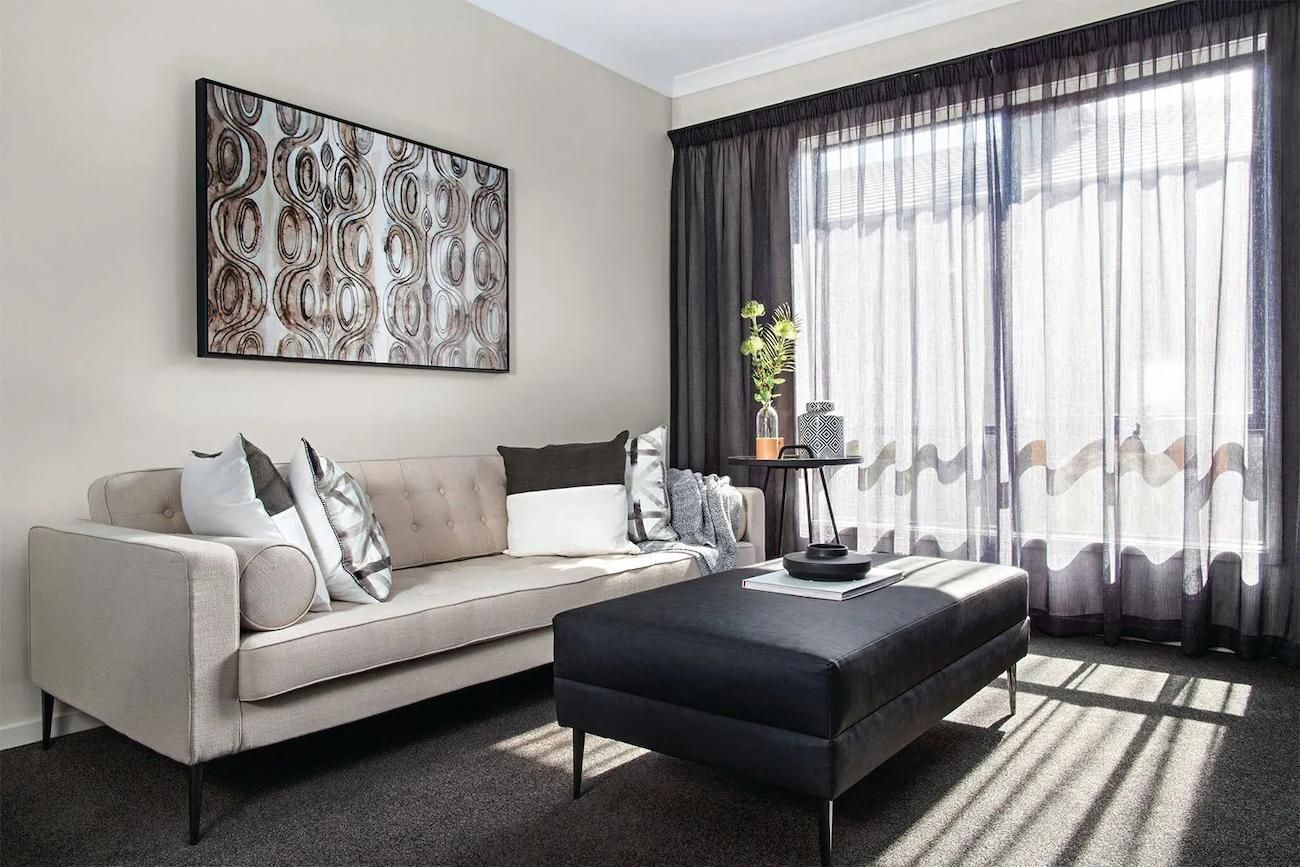
A layered approach to window coverings addresses this range of requirements without compromising on flexibility. Pairing a sheer curtain with a blockout or privacy curtain on a double track allows the household to dial the light and privacy level to whatever the moment requires — sheer alone during the day for soft, diffused light; blockout drawn in the evening for full privacy; both pulled back entirely when maximum light and openness is the priority. Practical considerations when planning layered window treatments for an open-plan space include:
- Whether a double track or double rod system suits the aesthetic of the space and the practicality of the hardware involved
- The width of the track or rod relative to the window opening, to ensure curtains clear the glass fully when both layers are open
- The interaction between the sheer and blockout layers in terms of colour and texture — they'll be seen together as often as separately
- The operating mechanism — hand-draw, wand or motorised — and how that suits the scale of the installation and the household's preference for ease of use
Motorised Curtains Are Worth Considering for Large Open-Plan Installations
As curtain installations grow in scale — long runs of glazing, high ceilings, multiple tracks across a large open-plan area — the practicality of manually drawing heavy curtains becomes a genuine consideration. Motorised curtain systems allow long or heavy panels to be operated from a remote control, wall switch or smartphone app, which changes the usability of the installation for households where the curtains are drawn and opened multiple times across the day.
Motorised systems also integrate with smart home platforms, which allows curtains to be programmed to open and close at set times or in response to light sensors. For east-facing windows that receive strong morning sun, automating the curtains to close before the sun creates glare and open again once the angle has shifted is a practical application that genuinely improves daily life rather than just adding a feature for its own sake. Motorisation adds to the overall cost of the installation, but for large open-plan spaces where the curtains are both a central design feature and a frequently used functional element, the investment is often justified by the improved usability of the finished result.
Talk to Our Team About Curtains for Your Open-Plan Space
At TT Shutters & Shading, we work with homeowners across the Northern Rivers and Tweed region to select and install curtains that are matched to the space, the lifestyle and the design intent of the home. Whether you're furnishing a new open-plan build, refreshing an existing space or trying to solve a light or privacy problem that previous window treatments haven't addressed, our team can bring samples to your home and work through the options with you in context, which is almost always the most useful way to make decisions about fabric, colour and hardware. For anyone looking at curtains in Ballina, curtains in Tweed Heads or curtains near you across the broader region, we'd welcome the opportunity to help you get the details right. Get in touch to arrange an in-home consultation and we'll come to you.